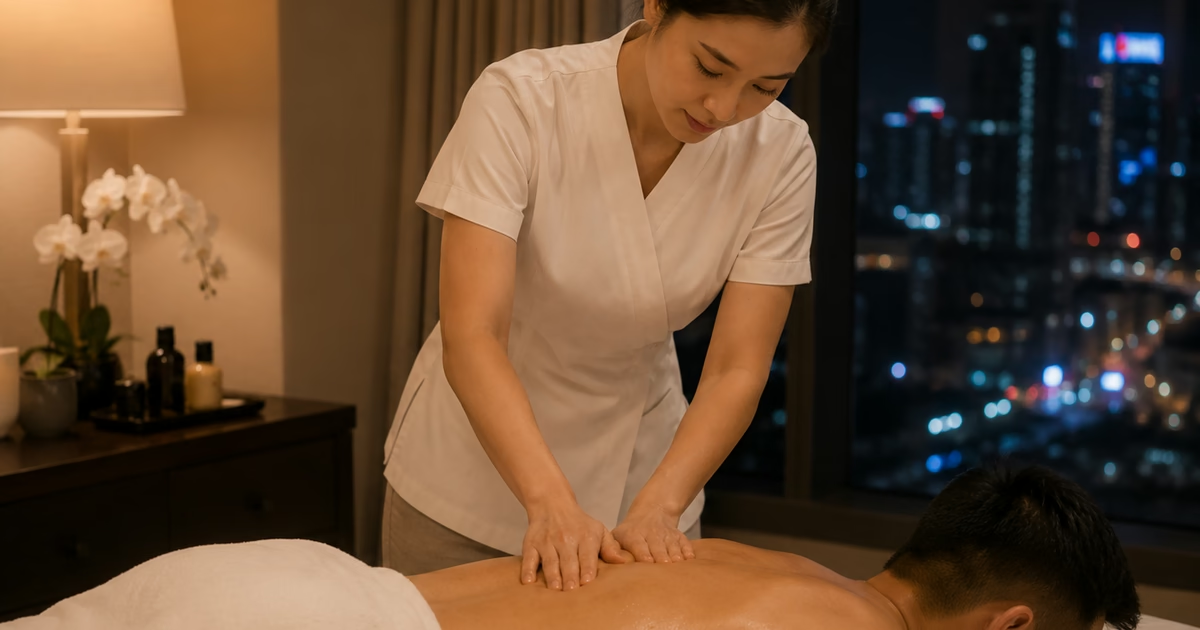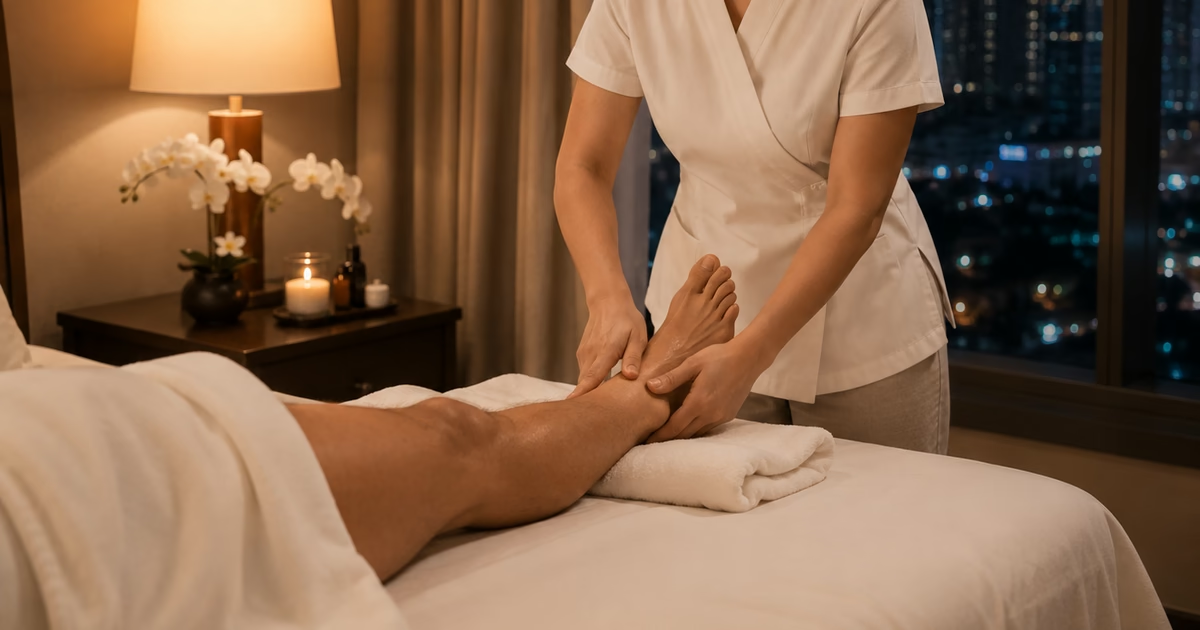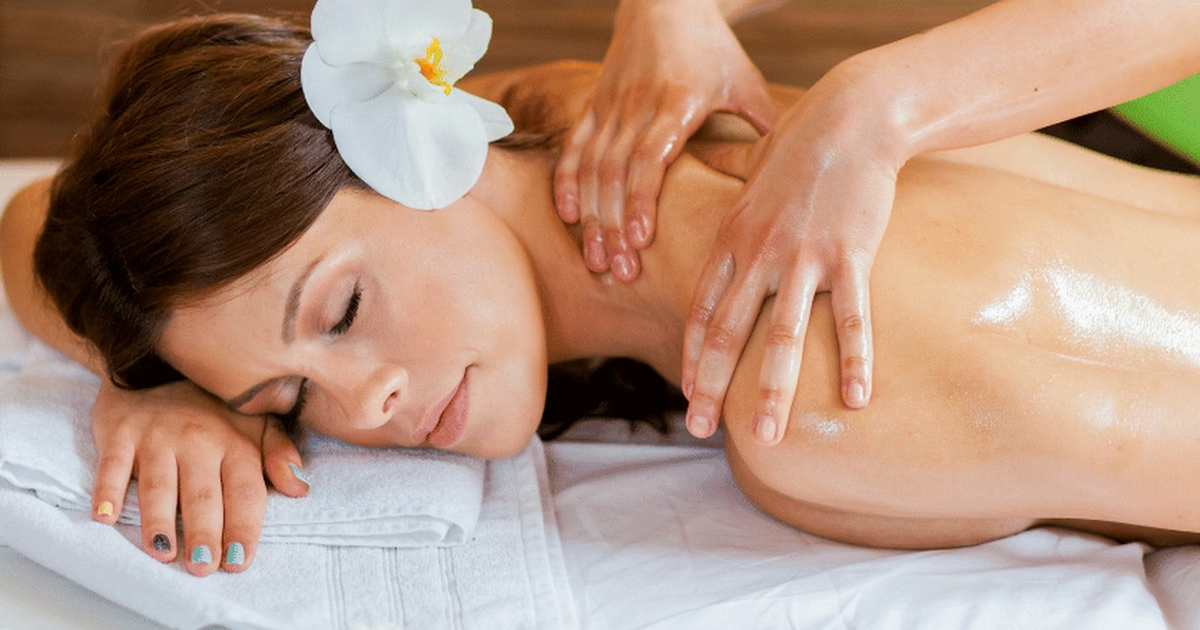
Your body starts asking for a massage long before you get around to booking one. The signs you need a massage are easy to miss because they build slowly: shoulders that never quite drop, a headache that keeps returning, sleep that will not settle, a temper shorter than usual. None of it is an emergency, which is exactly why most people ignore it for months. If a few of the signals below sound familiar, your body is overdue.
The trick is to read the pattern, not the one-off. Everyone has a stiff morning or a rough night now and then. What matters is the sign that keeps coming back, week after week, because that is tension and strain that your body cannot clear on its own. Here are the ones worth paying attention to.
Your neck and shoulders never fully relax
This is the most common sign, and the easiest to normalise. If your shoulders sit up near your ears and your neck feels tight most days, those muscles are holding tension they never get to release. Screens, posture, and stress all feed it.
Muscle tension is one of the top physical symptoms of stress, reported by 30% of adults in the American Psychological Association's Stress in America survey. Left alone, that tightness can harden into knots. If pressing a spot produces a tight, tender band that refers pain elsewhere, read up on massage for muscle knots, which covers what causes them and what releases them.
Headaches keep coming back
A headache now and then is normal. A pattern is a signal. Tension headaches often trace back to tight muscles in the neck and shoulders, so if you get a dull, banding headache regularly, the cause may be lower down than your head.
This is one to take seriously rather than medicate on repeat. The link between neck tightness and head pain, and what actually helps, is covered in massage for tension headaches.
Your lower back aches by the end of the day
If your back is fine in the morning and sore by evening, that daily pattern points at how you sit, stand, and move rather than injury. It is one of the most common complaints there is, and it responds well to having the surrounding muscles worked.
The full picture, including when back pain is muscular and when it is not, is in massage for lower back pain. If yours is the everyday, muscular kind, it is a clear sign you are due.
You feel stiff and cannot move as freely
When it gets harder to turn your head to check a blind spot, reach behind you, or bend without thinking about it, your muscles and connective tissue have tightened up. Reduced range of motion creeps in so gradually that many people assume it is just age or a bad night's sleep.
It usually is not permanent. Regular movement helps, and massage helps by loosening the tissue that has shortened and stuck. If you have started working around your own stiffness, that is your body asking for attention.
Sleep is not fixing your tiredness
Being tired after a short night is normal. Being tired after a full night is not, and it often traces back to stress and tension keeping your body from resting properly. A wound-up nervous system does not switch off just because you are in bed.
This is common for anyone on an odd schedule, which is why massage for shift workers looks at how bodywork helps sleep quality even when the timing is against you. If you sleep enough hours and still wake up unrested, tension is a likely culprit.
Your legs and feet feel heavy
If your legs feel like lead after a day walking or standing, that is muscle fatigue plus fluid settling in your lower legs from being upright. It builds over a long day and eases once you get off your feet, but a massage moves it along faster.
This one is easy to write off as normal tiredness. It is worth reading massage for tired legs and feet if heavy legs are a regular end to your day.
You are wound up and short with people
Stress does not stay in your head. In the same APA survey, 77% of adults said they regularly feel physical symptoms of stress, with fatigue and headaches near the top of the list. A clenched jaw, shallow breathing, and a short fuse are your body running hot.
Massage calms that arousal and shifts you toward a rest state, which is why people often feel mentally lighter afterward, not just physically looser. If you have been snapping at small things, that is a sign worth listening to.
You wake up with a clenched jaw
Tension does not clock off while you sleep. A tight jaw in the morning, a dull ache around the temples, or teeth that are wearing down often mean you are clenching or grinding at night, usually driven by stress carried through the day. The jaw, neck, and scalp muscles are all connected, so that tightness rarely stays in one place.
Massage of the neck, shoulders, and head eases the surrounding tension that feeds the clenching. If you are waking up sore around the jaw more often than not, your body is flagging a stress load it cannot shed by itself.
You feel run down for no clear reason
Sitting in a tense, stressed state for weeks on end wears you thin in a way a single early night will not fix. You feel foggy, low on patience, and slower to bounce back, without any obvious illness behind it. It is not a diagnosis, but it is a pattern worth noticing.
Massage will not cure that on its own, but the relaxation side of it helps pull your body out of the constant low-grade stress that drains you. Feeling run down with no clear cause is often the sum of many small strains you have not dealt with, and easing the physical side gives the rest of you room to recover.
When it is not "overdue for a massage"
Most of the signs above are ordinary strain, and a massage genuinely helps. Some are not, and it matters to tell them apart.
About 1 in 5 US adults live with chronic pain, roughly 20.9% of the population (CDC, MMWR, 2023). Persistent pain like that is common, but it is a reason to see a doctor, not something a massage alone resolves. See a professional rather than booking a massage if pain is severe, keeps getting worse, follows an injury, or comes with numbness, tingling, weakness, or one-sided swelling. Those are not simple tension, and massage is the wrong first move.
For everything else, the everyday tightness, stiffness, poor sleep, and stress, the useful habit is to act on the signals early rather than waiting until something really hurts. You do not have to be in pain to earn a massage. Most people leave it far too long, book once they are miserable, and then wonder why it took a full session just to undo the backlog. Catching the signs sooner keeps that backlog from building in the first place.
If a handful of these signs are familiar, a massage near me is an easy reset, and the pricing page shows the styles and session lengths so you can match one to whatever your body is complaining about. Your body has been asking for a while.
Frequently asked questions
What are the signs you need a massage?
The common ones are muscle tension that never fully lets go, especially in the neck and shoulders, headaches that keep coming back, a nagging lower back, feeling stiff with less range of motion, poor sleep, heavy tired legs, and a shorter temper than usual. Stress often shows up physically before you notice it mentally. If several of these sound familiar, your body is overdue.
How do you know if your body needs a massage?
Listen for the signals that repeat. A one-off stiff neck is normal, but tension that comes back every week, a headache pattern, or sleep that will not settle are your body flagging built-up strain. You do not need to be in serious pain to benefit. Most people leave it far too long and only book once something really hurts.
Can stress really cause physical symptoms?
Yes, and it is extremely common. In the American Psychological Association's Stress in America survey, 77% of adults said they regularly experience physical symptoms of stress, the most common being fatigue, headaches, and muscle tension. Stress you carry in your mind tends to settle in your body as tight muscles and a clenched jaw, which is exactly what massage helps release.
How often should you get a massage?
It depends on how much strain your body takes and your budget, so there is no single rule. Many people find that once every two to four weeks keeps tension from stacking up, while others go when the signs return. If you sit or stand all day or train hard, more frequent sessions make sense. Listen to the signals rather than a fixed calendar.
Is it normal for your neck and shoulders to always feel tight?
Common, but not something you have to just accept. Constant neck and shoulder tightness usually comes from posture, screens, and stress, and the muscles hold that tension until something releases it. Massage is one of the more direct ways to do that. If the tightness comes with numbness, weakness, or pain shooting down an arm, see a doctor instead.
When should you see a doctor instead of getting a massage?
See a doctor when pain is severe, keeps getting worse, or does not ease with rest, when it follows an injury, or when it comes with numbness, tingling, weakness, or swelling on one side. Those are not simple tension. About 1 in 5 US adults live with chronic pain, and persistent pain like that needs a medical opinion, not just a massage.
Does a massage actually help with these signs?
For the tension, stress, and stiffness kind, yes, and often noticeably. Massage releases tight muscle, calms the nervous system, and helps you sleep better, which covers most of the everyday signs. It will not fix a structural problem or replace medical care for a real injury. Treat it as maintenance for a body under strain, not a cure for everything.