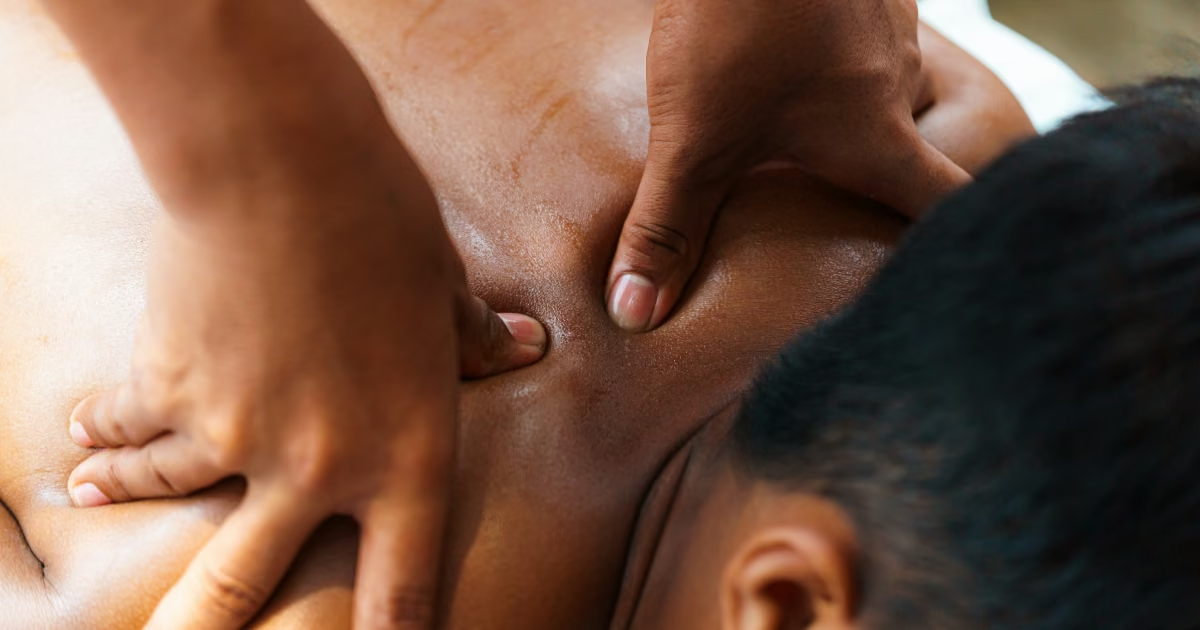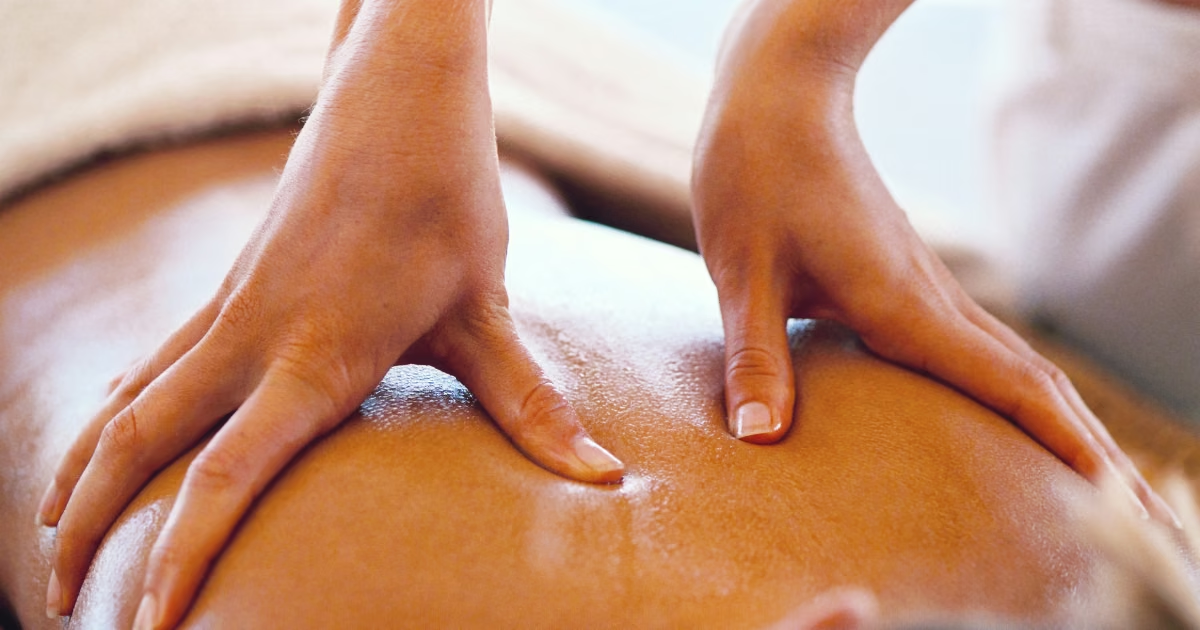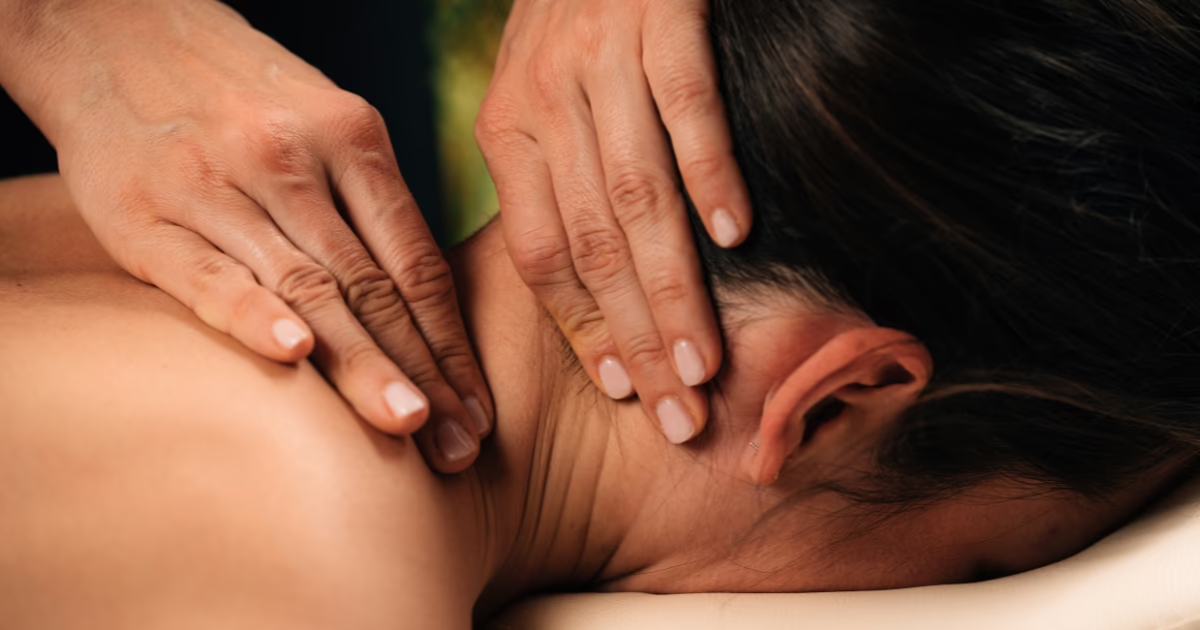
Massage for a tension headache works on the muscles behind it, not the headache itself. Most tension headaches are the neck and shoulders complaining after a long, hunched day, and the pain gets referred up into the head. Firm, patient work on the neck, shoulders, and the base of the skull loosens those muscles and often eases the ache. It will not cure a headache disorder, and it is not the answer for every kind of headache. For the ordinary, muscle-driven sort, it is one of the more direct forms of relief.
Why a tight neck turns into a headache
Tension-type headache is the most common headache there is. It affects about 26% of people worldwide, and on any given day roughly one person in six somewhere on earth has a headache of some kind (Stovner et al., The Journal of Headache and Pain, 2022). Most of those are not migraines or anything sinister. They are the muscular kind.
The mechanism is simpler than it feels. When the muscles across your shoulders and up the back of your neck stay contracted for hours, they develop tight, tender bands. Those bands refer pain away from themselves, up into the head, around the temples, and sometimes behind the eyes. So the headache feels like it lives in your skull, but the source is a few inches lower, in muscle that has been holding your head still over a screen since morning.
That is the part massage can reach. It cannot do anything about a headache with a different cause, but for the muscular sort it works on the actual source rather than the symptom.
The spots that matter
A good neck-and-shoulder massage for headaches spends its time in three places.
- The upper trapezius, the ropey muscle across the tops of the shoulders that creeps up toward your ears when you are stressed.
- The suboccipitals, the small deep muscles at the base of the skull. Work here is the single most reliable way to ease a tension headache, and it is also the spot most people never reach themselves.
- The sides and back of the neck, where tight muscles refer pain up toward the temple and behind the eye.
These are the same tight bands that show up as muscle knots, just in the specific muscles that send their pain into the head. A therapist can hold steady pressure on a tender spot until it softens, then move on. That is hard to do to yourself, because you cannot fully relax a muscle you are using to reach the spot.
What the evidence actually shows
The best trial on massage for tension headaches has a mixed result, and it is worth knowing before you book. This is where the honest version and the sales pitch part ways.
Researchers randomized 56 people with tension-type headache to 12 sessions of trigger-point massage, a sham ultrasound placebo, or a wait list. Two things came out of it. Massage measurably loosened the muscles: the pressure needed to make them hurt went up in every muscle tested, and only in the massage group. And patients felt it, reporting clearly more pain relief from massage than from the placebo (Moraska et al., The Clinical Journal of Pain, 2015).
The catch is headache frequency. The number of headaches dropped for the massage group, but it also dropped almost as much for the people getting a convincing fake treatment, and the two were not meaningfully different. In other words, a good chunk of the "fewer headaches" effect was the general benefit of lying down, being cared for, and expecting to improve.
None of that makes massage pointless. It loosens the muscles that genuinely drive the pain, and it makes people feel better, both of which are real and worth having. It just means the honest claim is narrower than "massage cures headaches." Book it to relieve the neck and shoulder tension. Treat any drop in headache count as a welcome bonus rather than the guarantee.
Matching the massage to your headache
Which style helps depends on why your neck is tight.
If the cause is posture, long hours, and stubborn muscle, firmer work earns its place. A deep tissue massage, from ฿1,400 for 60 minutes, gives the slow, sustained pressure that reaches the deeper neck and shoulder muscles. If your neck feels stiff and locked more than sore, Thai massage, from ฿900 for 60 minutes, uses assisted stretching and acupressure without oil, which suits a range-of-motion problem.
If your headaches ride on stress more than posture, do not assume you need the hardest pressure available. Moderate pressure that calms your nervous system can help a stress headache as much as deep work, and it is easier to actually relax into. Session lengths and prices for each style are on the pricing page.
Sixty minutes is enough to cover the neck, shoulders, and upper back properly. Say where the headache sits during the session. Pain behind the eyes, at the temple, or at the base of the skull each points to slightly different muscles, so a therapist can spend the time where it counts.
Booking one when the headache is already here
The awkward thing about a tension headache is the timing. It usually lands late in the day, after the desk hours and the commute that caused it. That is the exact moment you least want to get dressed and sit in traffic to reach a massage shop.
That is the practical case for a therapist coming to you. A slow evening of screens and traffic is the classic Bangkok headache builder. A therapist reaches most addresses in 30 to 40 minutes, travel is free within 6.9 km, and booking runs from 2 PM to 3 AM. So a 9pm session on the night the headache actually arrives is a normal request.
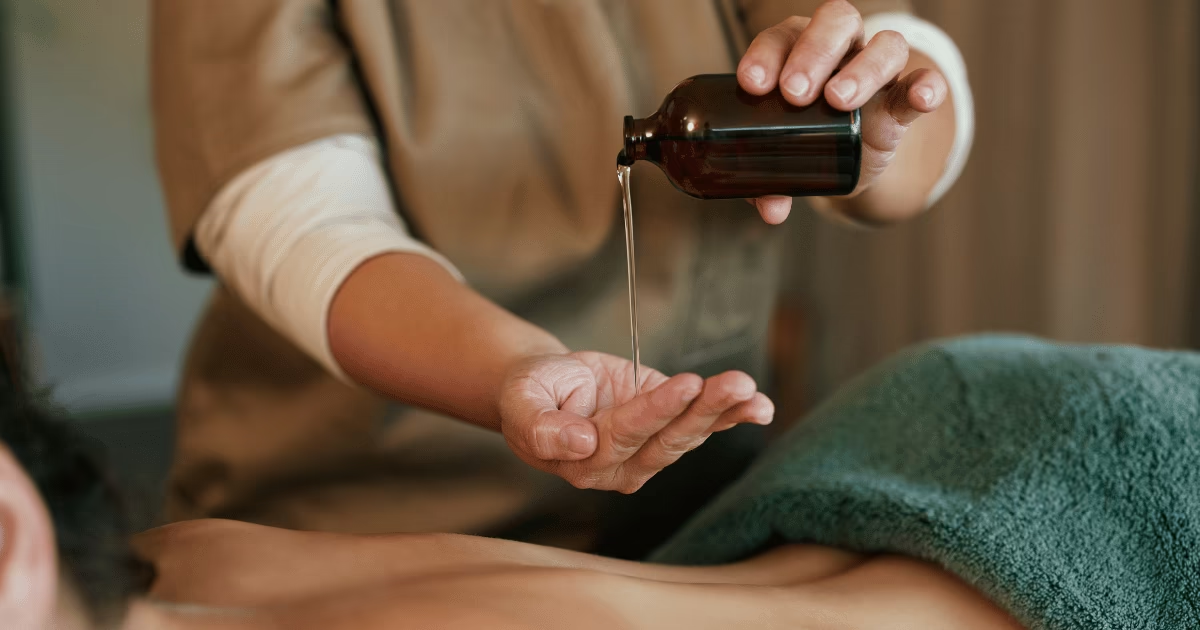
She brings the oils and fresh sheets and lays them over your own bed, so you do not have to sit upright in a car with a sore neck to get there. If you would rather just find a massage near me and go out, that works too. The headache does not have to wait for a better time.
When it is not a tension headache, and not a massage job
Most headaches are muscular. Some are not, and those are the ones that need a doctor rather than a therapist.
Get medical help, not a massage, if a headache comes on suddenly and severely, is the worst you have ever had, or follows a knock to the head. The same goes for a headache with fever and a stiff, painful neck. So does one that arrives with vision changes, weakness, numbness on one side, confusion, or slurred speech. Those patterns point to something other than tight muscles, and firm pressure on your neck is the wrong response to them.
See a doctor in a calmer way, too, if headaches are getting more frequent or more intense over weeks, if they wake you from sleep, or if ordinary painkillers have crept into near-daily use. Massage sits alongside proper medical care in those cases, not instead of it.
And if what your headache really needs is a dark room, water, and sleep, have those first. A massage is good at loosening the muscle that feeds a tension headache. It is not a substitute for the basics that prevent one.
Frequently asked questions
Does massage help tension headaches?
It helps the muscular side, which is most of what a tension headache is. In a randomized trial of 56 people, massage focused on trigger points in the head and neck measurably reduced how tender those muscles were, and patients reported more pain relief than a sham treatment. On headache frequency alone, though, a convincing placebo did about as well, so treat massage as real relief for tight muscles rather than a guaranteed cure for the headaches themselves.
What kind of massage is best for tension headaches?
One that works the neck, shoulders, and the base of the skull. Deep tissue and firm neck-and-shoulder work suit tight, stubborn muscles. Thai massage suits a stiff neck and shoulders through assisted stretching without oil. If your headaches are driven mostly by stress rather than posture, a slower oil massage that calms you down can help as much as deep pressure.
Which muscles cause tension headaches?
Mostly the upper trapezius across the tops of the shoulders, the suboccipital muscles at the base of the skull, and the muscles along the sides and back of the neck. Tight bands in these muscles can refer pain up into the head, around the temples, and behind the eyes, which is why working the neck and shoulders often eases a headache that feels like it lives in the skull.
How often should you get a massage for tension headaches?
If headaches are frequent, once a week for three or four weeks is a fair trial to see whether it helps. After that, most people settle into every two to four weeks, or book when a stretch of desk work and bad sleep starts to build the tension back up. If regular massage changes nothing over a month, the cause is probably not muscular and worth checking with a doctor.
Can you massage a tension headache away yourself?
Sometimes, partly. Slow pressure on the base of the skull and the tops of the shoulders, plus gentle neck movements and a warm compress, can take the edge off a mild one. Self-massage is limited because you cannot fully relax the muscles you are using to work on yourself, so it is a useful first step rather than a full fix.
Is a stiff neck causing my headaches, or the other way around?
For a tension headache the muscle tension usually comes first, then the headache follows. A long day hunched over a screen tightens the neck and shoulders, those muscles refer pain into the head, and the headache arrives later. That is why loosening the neck and shoulders often helps, even though the pain is felt in the head.
When should you see a doctor instead of booking a massage?
See a doctor if a headache is sudden and severe, is the worst you have ever had, follows a blow to the head, or comes with fever, a stiff painful neck, vision changes, weakness, numbness, confusion, or slurred speech. Those are not tension headaches, and massage is not the right answer for them. A headache that keeps getting worse over days or wakes you from sleep also needs a doctor rather than a therapist.