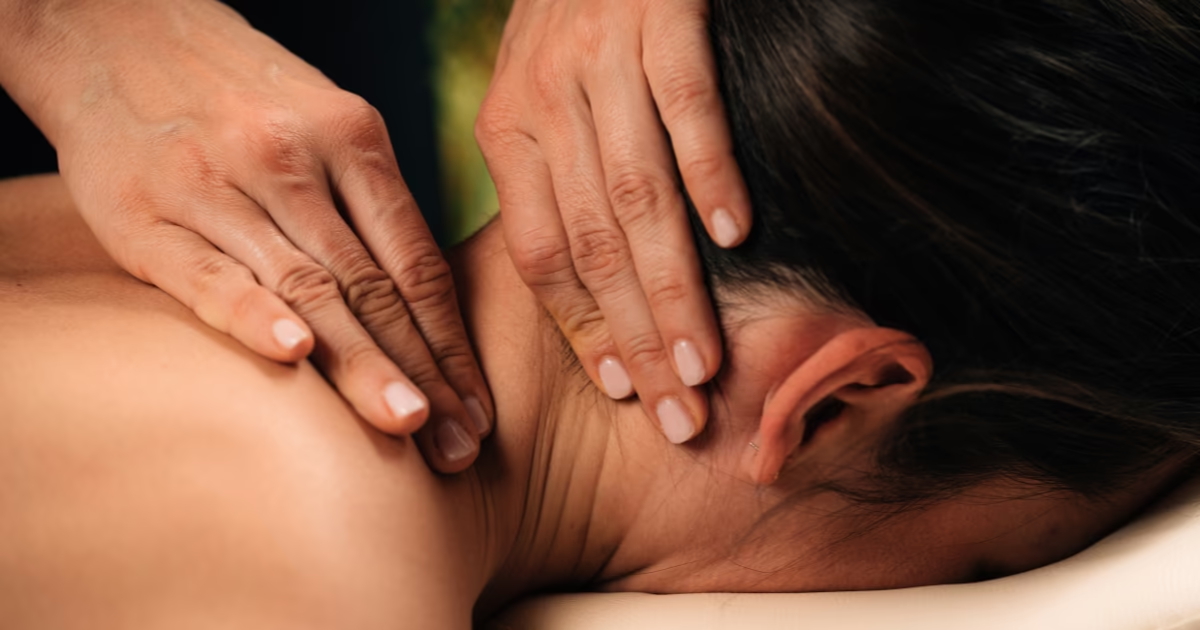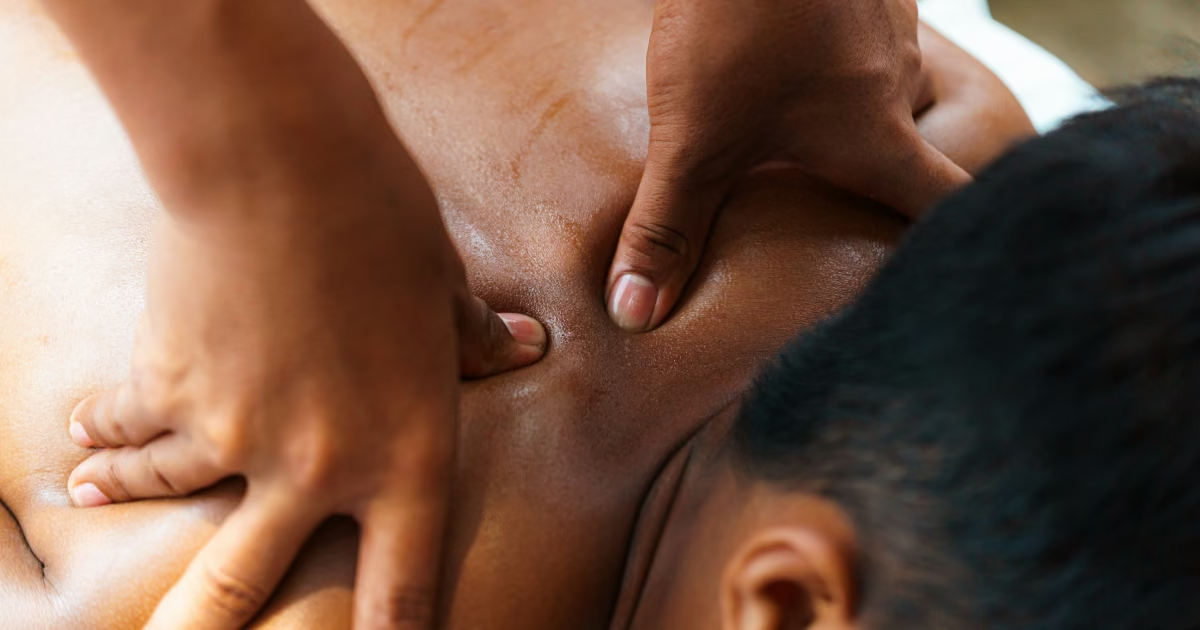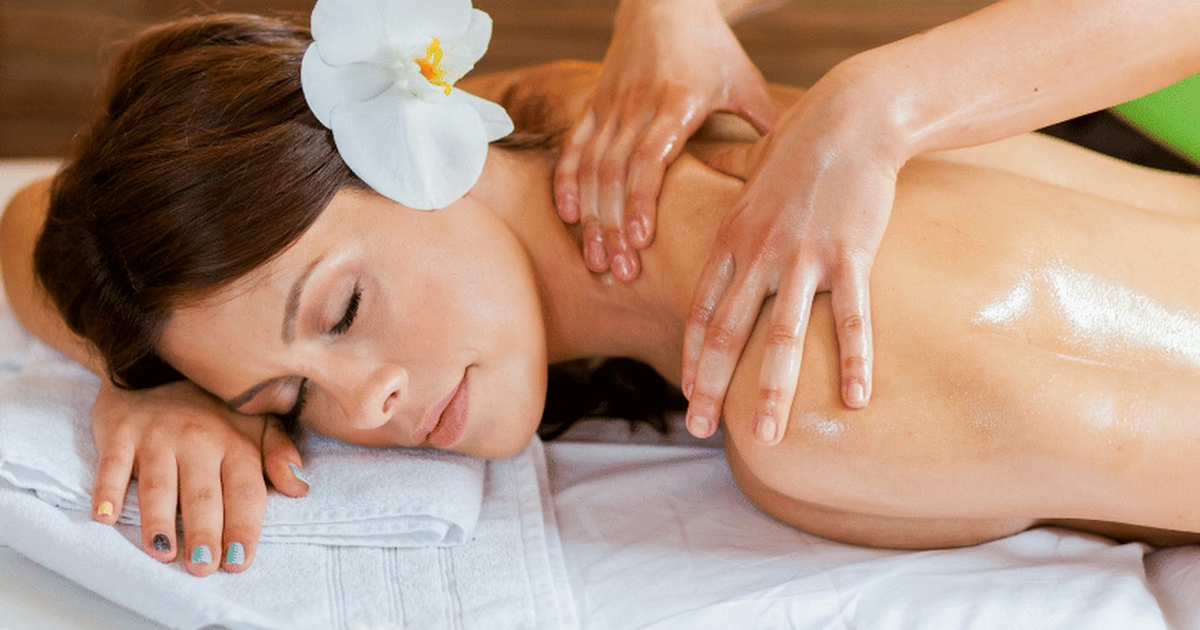
The honest answer is that oil and dry massage are closer in effect than most articles admit. Oil massage uses warm oil on bare skin for long, gliding strokes. Dry massage, meaning traditional Thai, works through loose clothing with pressure and assisted stretching. For tight muscles both work, and the research comparing them head to head found little between them. So the real choice is about what you want the hour to feel like, not which one is secretly better.
What actually separates them
The difference is not just the oil. It changes what the therapist can physically do.
With oil on bare skin, hands glide. That allows long strokes down the length of a muscle, steady sustained pressure, and the slow rhythmic work most people picture when they think of a massage. You are undressed to your comfort level and covered with a towel or sheet, with only the area being worked left uncovered.
Dry massage needs the opposite. Without oil the therapist has grip, which means they can lean into a point and hold it, use forearms and thumbs for deep compression, and take a limb through a stretch without sliding. You stay in loose clothing the whole time. Thai massage also involves movement in a way oil massage does not, since the therapist moves your joints through their range rather than only working the muscle.
One practical note that matters for planning. Traditional Thai massage is usually pictured on a floor mat. Luna does not bring a mat or a table, so a Thai session happens on your own bed over fresh sheets. The stretching works fine there. It just means you do not need to clear floor space.
The evidence says the gap is small
This is where the usual advice gets ahead of itself. Almost every comparison article confidently declares a winner for muscle pain. The research does not support that confidence.
The most direct test randomized 180 people with back pain caused by muscle trigger points into either traditional Thai massage or Swedish oil massage, six sessions across three to four weeks. Both groups cut their pain by more than half, and it held a month later. The comparison between the two styles found no significant difference in pain, pressure-pain threshold, or lumbar flexion (Chatchawan et al., Journal of Bodywork and Movement Therapies, 2005).
A later review of the published literature reached the same place. It concluded the two styles appear about equally effective for chronic low back pain, while noting the underlying studies had limits and more direct comparisons were needed (Sritoomma et al., Complementary Therapies in Clinical Practice, 2012).
Both of those looked at back pain specifically, so they do not settle every case. But the pattern is worth taking seriously. If you are choosing purely on which one will loosen a tight back better, you are optimising something that barely moves. Choose on the experience instead.
Matching the style to the kind of tight
"Tight" covers two different problems, and they point to different styles.
- Sore, tender, aching muscle that hurts to press. Oil work suits this. The glide lets a therapist apply pressure gradually without the sharp grab that dry work can have on an already irritated muscle.
- Stiff, restricted, cannot-turn-my-neck movement. Dry Thai suits this better, because stretching and joint movement address range directly, and no amount of stroking a muscle restores movement the way moving it does.
If both describe you, which is common, pick by what you want afterwards. An oil massage from ฿1,000 for 60 minutes tends to leave people calm and a little sleepy, which is why it suits an evening. Thai massage from ฿900 leaves most people feeling loosened and more mobile, sometimes energised rather than sleepy.
If your tightness has settled into specific tender points rather than a whole region, that is a slightly different problem, and massage for muscle knots covers it. If you want scent and a stronger wind-down effect, aromatherapy is the oil route at ฿1,200. Full session lengths and prices sit on the pricing page.
Oil leaves you oiled, dry leaves you dressed
Beyond technique, the two have different logistics, and this decides it for a lot of people.
Oil means bare skin, so you need somewhere you are comfortable undressing, and there will be oil on you afterwards. Give it an hour or two to absorb before showering. Plenty of people book oil work for late evening and just sleep with it on.
Dry means you stay clothed, so it is easier if you are less comfortable undressing, and there is nothing to wash off. You can take a call ten minutes later without needing a shower first. Wear something you can genuinely stretch in. Jeans and belts make a Thai massage worse.
When a therapist comes to you, the setup for both is small. She brings the oils and fresh sheets and lays them over your bed, reaching most Bangkok addresses in 30 to 40 minutes, with travel free within 6.9 km and booking from 2 PM to 3 AM. Whichever style you pick, you are not clearing furniture or setting anything up. If you would rather search for a massage near me and go out instead, that works too.
When neither is the right call
A style choice will not fix a problem that is not muscular.
If your pain is sharp rather than achy, travels down a limb, or comes with numbness or weakness, see a doctor before booking either one. The same goes for pain after a fall, and for swelling or bruising over the area. Firm pressure and stretching are both wrong answers for an injured joint or a compressed nerve.
Skip the deep end of either style in the first day or two of an acute flare. Muscle in spasm reads strong pressure as another threat, and hard stretching on top of that can set you back. Gentle work is fine, and so is waiting.
And if what you want is a steam room, a sauna, or somewhere to shower afterwards, a shop suits you better than someone arriving at your door. Come-to-you makes sense when the trip is the thing standing between you and the massage, which is most weekday evenings here, but not every one of them.
Frequently asked questions
What is the difference between oil massage and dry massage?
Oil massage uses warm oil on bare skin, so the therapist can glide with long, flowing strokes and sustained pressure. Dry massage, which in Thailand means traditional Thai massage, uses no oil at all. You stay in loose clothing while the therapist works with palms, thumbs, and forearms, and moves you through assisted stretches.
Which is better for tight muscles, oil or Thai massage?
Neither is clearly better. A trial of 180 people with back pain from muscle trigger points compared traditional Thai massage against Swedish oil massage, and both cut pain by more than half with no meaningful difference between them. Choose by the kind of tight you feel: oil work suits sore, tender muscle, and Thai suits stiffness and restricted movement.
Does Thai massage use oil?
No. Traditional Thai massage is completely dry. That is the point of it. The therapist needs grip and leverage to apply pressure and move you through stretches, and oil would make that impossible. If you want oil, you are asking for an oil, aromatherapy, or coconut oil massage instead.
Do you keep your clothes on for a dry massage?
Yes. You stay dressed in loose, comfortable clothing that you can stretch in, something like soft trousers and a t-shirt. Avoid jeans, belts, and anything tight at the waist or knees. For an oil massage the opposite applies, since the oil needs to go on bare skin, and you are covered with a towel or sheet throughout.
Should you shower after an oil massage?
Not straight away. Give the oil an hour or two to absorb, since that is part of what you paid for. Many people book an oil massage for the evening and simply sleep with it on, then shower in the morning. After a dry Thai massage there is nothing to wash off, which is a practical advantage if you are short on time.
Is Thai massage more painful than oil massage?
It can feel more intense, though intense is not the same as painful. Thai massage combines firm pressure with stretches that reach the end of your comfortable range, which some people find strong at first. Oil massage tends to feel smoother because the strokes glide. Both should stay within what you can breathe normally through, so say something if it goes past that.
Can you get oil and dry massage in the same session?
Not usually as a mix, because the two need opposite conditions: one needs bare oiled skin, the other needs dry grip and clothing. What people often do is alternate between them across bookings, using Thai when they feel stiff and an oil massage when they feel sore or wound up.