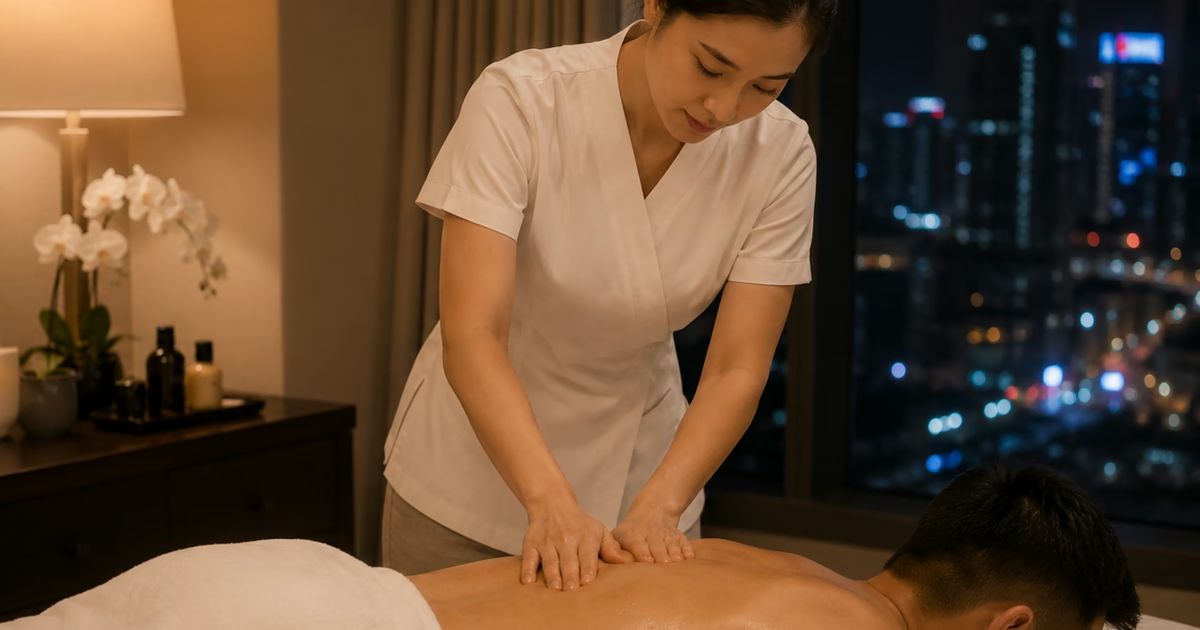
Most lower back tightness is not a lower back problem. That single fact changes what you should book and what a good session will look like.
Where it usually comes from
Sitting shortens the hip flexors at the front and switches off the glutes at the back. The pelvis tilts. The lower back is then holding a position it was not built to hold all day, and it complains.
The pain is real and it is in your back. The cause is usually a few inches lower and on the other side. This is why so many people get a back massage, feel better for two days, and are back where they started by the weekend: the sore area was treated and the thing pulling on it was not.
A good therapist will spend a meaningful part of a lower back session on the glutes and hips. If that surprises you, it should not.
Which treatment
**Deep tissue** if a specific area has been tight for more than a week. It works slowly and firmly into the layer beneath the surface, which is what long-standing tightness needs. Book 90 minutes rather than 60. The first stretch of any firm session goes on warming the tissue, so a 60 minute booking spends about a quarter of itself getting ready.
**Traditional Thai** if the problem is stiffness and restricted movement rather than a sore point. The assisted stretching opens the hips directly, which addresses the cause rather than the symptom.
**Oil massage** if you are generally tired and your back is one of several things that ache. It is not the strongest choice for a specific problem, but it is the right one when nothing in particular is wrong.
The honest answer for most desk-related lower back tightness is deep tissue at 90 minutes, with the therapist told at the start that the hips are fair game.
How many sessions
More than one, and closer together than you think.
Weekly for three or four weeks does considerably more for a long-standing problem than the same four sessions spread across six months. Tissue that has been worked recently has not fully reverted, so each session starts further along. Space them out and every session starts from zero.
Reassess after a month. If it has meaningfully changed, drop back to maintenance every two to four weeks. If it has not, massage is not the tool for this particular problem and a physiotherapist is the next call. A therapist who keeps selling you sessions that are not working is not doing you a favour.
What to say at the start
Three things, and they take fifteen seconds.
Where it hurts. How long it has been like that. Whether it is worse in the morning or by the evening. That last one is more useful than people expect: back tightness that is worst first thing often points somewhere different from tightness that builds through a day at a desk.
Say if you want the hips worked. Some people are surprised or uncomfortable when a therapist moves away from the sore area, and knowing you have agreed to it makes the session better.
When not to book at all
This part matters more than everything above it.
Do not book a massage, and see a doctor, if the pain radiates down a leg past the knee, if you have numbness, tingling or weakness in a leg or foot, if you have lost bladder or bowel control, or if the pain started after a fall or an accident.
Those are nerve and structural signs. Massage treats muscular tightness. Working firmly on a back that has a disc problem can make it worse, and no therapist can tell the difference from the outside.
Also skip it if you have a fever, an infection, a recent surgery in the area, or a clotting disorder. If you are pregnant, tell us when you book so the therapist can adjust the position, and check with your doctor or midwife first.
What to do between sessions
The least popular advice in massage and the most reliable one: ten minutes of hip stretching a few times a week extends how long a session lasts more than an extra session does.
If you sit for work, standing up every 45 minutes does more than any single treatment. Nothing a therapist does for 90 minutes competes with eight hours a day of the thing that caused it.
Booking one
A therapist reaches most Bangkok addresses in 30 to 40 minutes, and deep tissue starts at 1,400 baht for 60 minutes, or 1,600 for the 90 that this particular problem actually wants. If you are unsure whether the issue is tightness or something that needs a doctor, say what you are feeling when you message and we will tell you honestly if we think you should see someone else first.
Frequently asked questions
Which massage is best for lower back pain?
Deep tissue for tightness that has been there more than a week, and traditional Thai if the problem is stiffness and restricted movement rather than a sore spot. Book 90 minutes rather than 60, because the first stretch of the session goes on warming the tissue before any useful work starts.
Why does the therapist work my hips instead of my back?
Because that is often where the problem starts. Tight hip flexors and glutes from sitting pull on the pelvis, and the lower back takes the strain. Working only the sore area treats the symptom and it usually returns within days.
How many sessions will it take?
For long-standing tightness, weekly for three or four weeks does far more than the same number of sessions spread across six months. Reassess after that. If nothing has changed, massage is not the right tool and a physiotherapist is the next step.
When should I not book a massage for back pain?
If the pain radiates down a leg past the knee, if you have numbness, tingling or weakness in a leg or foot, if you have lost bladder or bowel control, or if the pain followed a fall or accident. Those need a doctor, not a therapist. Massage is for muscular tightness, not for nerve or structural problems.
Should I use heat or ice with it?
Heat before a session helps the tissue give. Ice is more useful for acute swelling in the first day or two after an injury, which is not what most desk-related back tightness is. If in doubt, warm is the safer choice for chronic tightness.