Post-workout massage timing depends on two things: how hard you trained, and how firm you want the pressure. Light massage is fine in the hours straight after exercise. Firm, deep work usually suits 24 to 72 hours later, once the soreness has properly arrived and the tissue is past its most irritated stage. Get the timing wrong and a massage can leave you more sore than you started.
The short answer on when to book
Soreness after a hard session does not arrive straight away. It builds overnight and usually feels worst a day or two afterwards, which is why the best time for a massage is rarely the moment you walk out of the gym.
- Light massage: any time on the day of training, including soon after you finish.
- Firm or deep massage: 24 to 72 hours after a hard session, when the soreness has peaked.
- Before training: keep it short and light, or skip it.
That said, none of this is a rule you must obey. It is a starting point that you adjust to how your body actually responds.
What a massage after exercise actually does
Massage changes how a sore muscle feels, which is the part most people notice. There is also evidence it does something at the cell level. Researchers at McMaster University massaged one leg of eleven participants for ten minutes immediately after they exercised to exhaustion, then took muscle biopsies from both legs. The massaged muscle showed reduced inflammatory signalling and more of the signals linked to building new mitochondria (Crane et al., Science Translational Medicine, 2012).
Worth keeping that in proportion. Eleven people is a small study, and it measured signalling inside the muscle, not whether anyone recovered faster in practice. It is a good reason to think massage is doing something useful. It is not proof that it halves your recovery time.
Massage does not flush lactic acid
This is the claim you will read almost everywhere, and it is wrong. Massage does not squeeze lactic acid out of your muscles.
A study at Queen's University tested it directly. Twelve people did strenuous handgrip exercise, then had their forearm blood flow and blood lactate measured through recovery under three conditions: rest, light movement, and massage. Massage reduced muscle blood flow during recovery and slowed lactate removal, the opposite of the popular claim (Wiltshire et al., Medicine and Science in Sports and Exercise, 2010).
Lactate is not what makes you sore two days later anyway. It clears on its own once you stop exercising. The ache you feel the next morning comes from the small amounts of damage that hard training does to muscle fibres. Massage is worth booking, just not for the reason most articles give.
Matching the massage to the workout
Pressure is the thing to match, more than style.
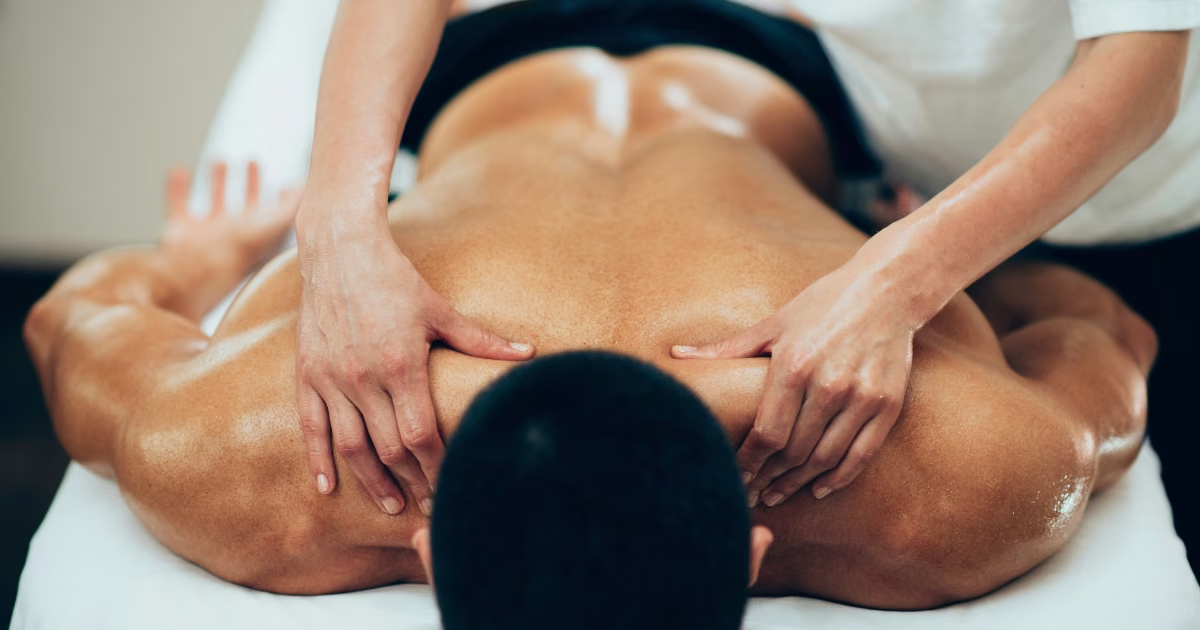
On the day of a hard session, gentler work is the safer choice. A warm oil massage at moderate pressure feels good on tired legs without adding insult to muscle that is already irritated. Ten to thirty focused minutes on the muscles you actually worked is often enough.
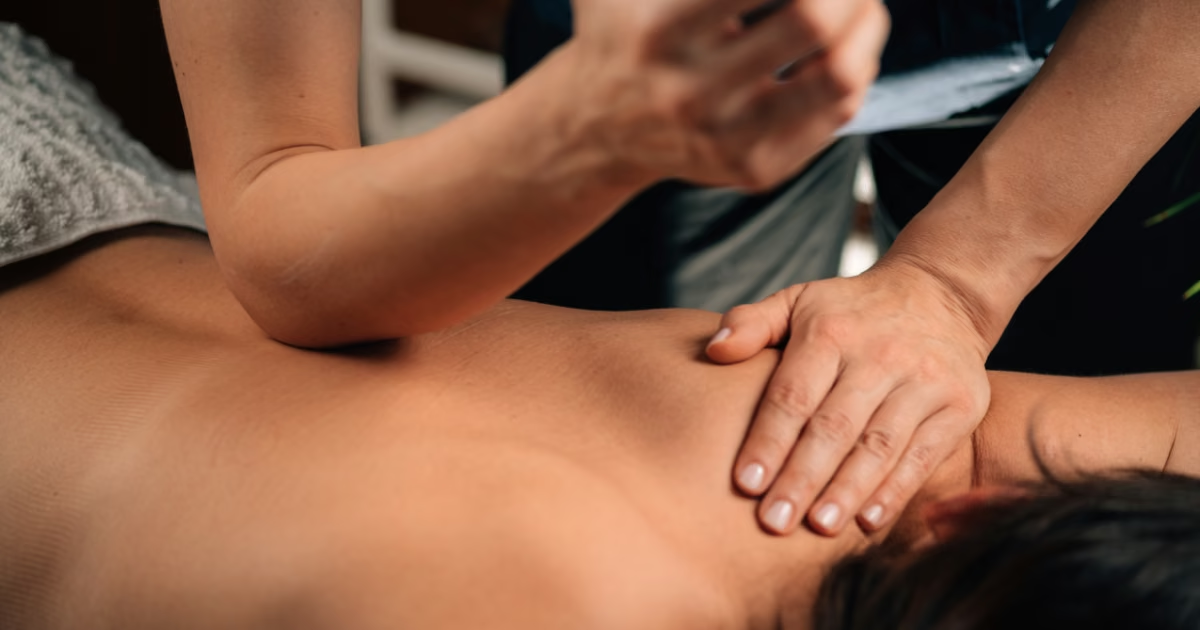
A day or two later, when the soreness has settled in, firmer work earns its place. The slow, sustained pressure of a deep tissue massage suits stubborn tightness in the quads, calves, or upper back. This is the window where many people look for a massage near me, because that is when the soreness is worst. If the tightness has hardened into a specific tender spot, that is a different problem, and massage for muscle knots covers it.
Thai massage sits somewhere else again. It uses assisted stretching and acupressure without oil, so it suits mobility work more than tenderness relief. Session lengths and prices for each style are listed on the pricing page.
Training again after a massage
Light movement on the same day is fine and often helps. A walk, an easy spin, or gentle mobility work keeps blood moving without loading the muscle that has just been worked on.
After firm or deep pressure, leave about a day before you train hard again. Deep work can make a muscle tender for roughly 24 hours, and stacking a heavy session on top of that is how a recovery week quietly turns into a bad one. If you have a key session or a race coming up, book the massage after it, not the day before.
Mild tenderness in the day after a deep massage is normal and fades. Sharp pain, bruising, or soreness that is still climbing on the second day is a sign the pressure went past what the tissue wanted. Say so during the session if it feels like too much. A therapist can only work to the feedback you give them.
When to skip a post-workout massage
Massage is a recovery aid, and it is honest to say where it stops being one.
Skip it, or go very gently, if the pain is sharp, localised, or getting worse instead of easing. That pattern points to an injury, not ordinary soreness, and deep pressure on a strained muscle makes it worse. Swelling, bruising, or pain that wakes you at night needs a doctor, not a therapist.
Skip the deep work right before you compete, too. Heavy pressure can leave a muscle feeling temporarily flat, and a start line is a poor place to discover that. Light and brief is the only sensible option in the day before an event.
And keep it in its place. A massage will not rescue a week of bad sleep or undereating. It sits alongside those things, helping a body that is already being looked after. On its own, it is a good hour that changes very little.
Frequently asked questions
When should you get a massage after a workout?
It depends on the pressure you want. Light massage is fine in the hours right after training. Firm or deep work is usually better 24 to 72 hours later, once the sharpest soreness has set in and the tissue is past the acute stage.
Is it bad to get a deep tissue massage right after exercise?
After a very hard session it can be too much. Freshly worked muscle is already irritated, and heavy pressure on top of that tends to leave you more sore, not less. Keep it light on the day, and save deep work for a day or two later.
Does massage flush lactic acid out of muscles?
No. This is a common myth. One study found that massage actually reduced muscle blood flow after strenuous exercise and slowed lactate removal rather than speeding it up. Lactate clears on its own once you stop exercising.
How soon can you work out after a massage?
Light movement the same day is fine. After deep or firm work, give yourself about 24 hours before training hard again, since the muscle can feel tender for a day. Listen to how the area feels rather than following a fixed rule.
Does massage actually help sore muscles?
It helps how the muscle feels, and there is evidence it affects recovery at the cell level. In a small study, ten minutes of massage after exhausting exercise reduced inflammatory signalling in the massaged muscle. It is a useful addition to rest and food, not a replacement.
Should you get a massage before or after a workout?
After, in most cases. If you do book before training, keep it short and light. Deep pressure shortly before an event can leave the muscle feeling flat, which is not what you want on a start line.
How long should a post-workout massage be?
For recovery, 60 minutes covers the main working muscles without overdoing it. Shorter, focused sessions of 10 to 30 minutes on one area also work well, especially on the same day as a hard effort.